
If you're experiencing upper back pain, know that you're not alone; this is a common issue that many of my patients face. You may have tried various remedies, but finding effective relief can sometimes feel challenging. As a chiropractor, I often recommend a holistic approach that combines stretching, strengthening exercises, and proper posture techniques to promote healing.
It's vital to consider your workstation ergonomics, as a well-designed setup can significantly impact your comfort and pain levels. In addition to these adjustments, exploring natural methods such as heat therapy and massage can also aid in alleviating discomfort. Are you interested in learning more about specific techniques that can truly make a difference? Let's dive into the ten best strategies for effective upper back pain relief that I frequently share with my patients.
Stretching Exercises
As a chiropractor, I want to emphasize the importance of stretching exercises for alleviating upper back pain and enhancing flexibility. Many of my patients experience discomfort due to tight muscles that can lead to stiffness and tension. By incorporating regular stretching into your daily routine, you can effectively target these problem areas, promoting better blood flow to your upper back, which in turn aids in healing and reduces discomfort.
Let's start with a simple yet effective stretch: the shoulder blade squeeze. While sitting or standing with a straight posture, pull your shoulder blades together, keeping your arms relaxed at your sides. Hold this position for five seconds before releasing. Aim to repeat this exercise ten times to help loosen the muscles in your upper back.
Another beneficial stretch is the doorway stretch. Stand in a doorway, placing your arms at a 90-degree angle with your forearms resting against the door frame. Gently lean forward until you feel a stretch across your chest and upper back. Hold this stretch for 15-30 seconds, and feel free to repeat it a few times. This stretch is excellent for opening up the chest and relieving tension in the upper back.
You might also find the cat-cow stretch helpful. Begin on your hands and knees, ensuring your wrists are directly under your shoulders and your knees under your hips. Start in the cat pose by arching your back upward and tucking your chin to your chest. Then, transition into the cow pose by dropping your belly and lifting your head. Flow between these two positions for about 30 seconds, allowing your spine to move freely and promoting flexibility.
Lastly, don't overlook the benefits of neck stretches. Gently tilt your head to one side, bringing your ear toward your shoulder, and hold this position for 15 seconds before switching sides. These neck stretches can significantly alleviate pain and enhance your overall mobility, leading to a more comfortable day-to-day experience.
Incorporating these stretching exercises into your routine can be a natural way to enhance your well-being and complement the chiropractic care you receive. Remember, your body deserves attention and care, and these simple stretches can be a powerful tool in your journey toward better health.
Strengthening Workouts
As a local chiropractor, I want to emphasize the importance of strengthening your upper back, especially when it comes to alleviating pain and enhancing your posture. Strengthening workouts are a vital component of your wellness routine, as they help stabilize your spine, support your shoulders, and reduce the risk of injury. By incorporating a few targeted exercises, you can make a significant difference in your overall health.
One effective exercise to consider is the bent-over row. You can easily do this with a pair of dumbbells. Begin by hinging at your hips and keeping your back flat. Pull the weights toward your chest while squeezing your shoulder blades together. Aim for three sets of 10 to 15 repetitions. This exercise effectively targets your rhomboids and lats, which are crucial for building upper back strength.
Another great option is the face pull. For this, use a resistance band anchored at chest height. Grab the band with both hands, keeping your arms extended. As you pull the band towards your face, make sure to flare your elbows out. This exercise focuses on your rear deltoids and upper traps, which can help correct rounded shoulders. I recommend performing three sets of 12 to 15 reps.
Don't overlook the Superman exercise—it's a fantastic way to engage your back muscles! Lie face down on the floor with your arms extended in front of you. Simultaneously lift your arms, chest, and legs off the ground, engaging your back. Hold this position for a few seconds before lowering back down. Aim for three sets of 10 to 12 repetitions.
Lastly, the seated row is a superb exercise for overall back strength. Using a cable machine or resistance band, pull the handle toward your abdomen, focusing on squeezing your back muscles. I suggest doing three sets of 10 to 15 reps.
By regularly incorporating these exercises into your routine, you'll build a stronger upper back, which can lead to lasting relief from pain.
Proper Posture Techniques
As your local chiropractor, I want to emphasize the importance of maintaining proper posture for not only alleviating upper back pain but also enhancing your overall well-being. Good posture aligns your spine correctly, which significantly reduces strain on your back muscles and ligaments. It's crucial to be mindful of how you sit, stand, and move throughout your daily activities.
When you're sitting, ensure your feet are flat on the floor and choose a chair that provides support for your lower back. Your knees should ideally be at or just below hip level, and it's best to avoid crossing your legs. This helps maintain balance in your hips.
Additionally, make sure your computer screen is at eye level; this will prevent you from leaning forward, which can lead to strain in your upper back.
In terms of standing, aim to distribute your weight evenly across both feet. Keep your shoulders back and relaxed, and ensure your head is aligned with your spine. A helpful visualization is to imagine a string gently pulling the crown of your head upward, encouraging you to stand tall.
When walking, engage your core muscles. This not only supports your spine and pelvis but also promotes a natural stride. If you often carry a bag, consider using a backpack to distribute weight evenly or switch sides frequently to avoid muscle imbalances.
Finally, remember to take regular breaks if you find yourself sitting or standing for long stretches. Use these moments to stretch and reset your posture.
Ergonomic Workstation Setup
As a local chiropractor, I want to emphasize the importance of creating an ergonomic workstation setup to support your posture and help prevent upper back pain, especially if you spend long hours at your desk.
Let's start with your chair—it's vital that it provides proper support for your lower back. Ensure that your feet rest flat on the floor; if not, a footrest can make a big difference. Your knees should be at or slightly below hip level to maintain good alignment and minimize strain.
Next, let's talk about your desk and monitor placement. Your monitor should be positioned at eye level and about an arm's length away. This will prevent you from tilting your head up or down, which can lead to neck and upper back discomfort. If you primarily use a laptop, consider investing in a stand or an external monitor to achieve the correct height.
Your keyboard and mouse should be easily accessible. Keep your elbows close to your body, bent at a 90-degree angle, and maintain straight wrists. A wrist rest can be helpful in keeping your hands in a neutral position, reducing the risk of strain.
Lighting also plays a crucial role in your workstation setup. Ensure that your workspace is well-lit to avoid leaning forward to see your screen better. Position your light source behind you to reduce glare on your monitor, which can cause unnecessary strain on your eyes and neck.
Finally, I can't stress enough the importance of taking regular breaks. Stand up, stretch, and move around every 30 to 60 minutes. This practice not only provides relief to your muscles but also promotes healthy blood circulation.
Heat Therapy
As a local chiropractor, I often see patients struggling with upper back pain, and I want to share with you an effective natural remedy: heat therapy. This simple yet powerful approach can significantly enhance your healing process.
By applying heat, we can increase blood flow to the affected area, which promotes healing and helps relax tight muscles that may be contributing to your discomfort.
Heat therapy offers soothing relief, making it an excellent complement to chiropractic care. Whether you're using a heating pad, warm towel, or taking a warm bath, it's important to know how to apply heat effectively.
I encourage you to explore the benefits of heat therapy as part of your overall wellness plan, and don't hesitate to ask me for guidance on how to incorporate it into your routine for optimal results.
Your journey to relief and improved health starts with understanding and utilizing these natural healing techniques.
Benefits of Heat Therapy
As a local chiropractor, I often recommend heat therapy as a highly effective remedy for alleviating upper back pain. It can provide much-needed relief to tense muscles that may be contributing to your discomfort.
One of the standout benefits of heat therapy is its ability to increase blood flow to the affected area. This enhanced circulation delivers vital nutrients and oxygen, which can promote faster healing and recovery.
When you apply heat, you'll find that it helps to relax those tight muscles, easing stiffness and reducing discomfort. This relaxation not only alleviates pain but also enhances your overall range of motion, making daily activities much easier and more enjoyable.
Additionally, heat therapy can stimulate your body's natural pain-relief response. The warmth activates nerve endings, which can help decrease the perception of pain in your upper back.
It's also important to note that using heat can have a positive effect on your mental well-being. The soothing warmth promotes a sense of comfort and relaxation, which can significantly reduce stress and anxiety—factors that often exacerbate back pain.
By incorporating heat therapy into your routine, you can take a more holistic approach to managing upper back pain, addressing both physical and emotional aspects.
I encourage you to consider making heat therapy a part of your pain management strategy for more effective relief. If you have any questions about how this can fit into your overall care plan, feel free to ask during your next visit!
Application Methods Explained
As a local chiropractor dedicated to your well-being, I believe it's essential to educate you about the various methods of heat therapy that can alleviate discomfort and enhance your healing process. Understanding these options will empower you to choose the best approach for your individual needs.
One of the most commonly recommended methods is the use of a heating pad. Simply plug it in, set the temperature to a level that feels comfortable for you, and place it on your upper back for 15-20 minutes. Always remember to use a cloth barrier to protect your skin from burns.
If you prefer a more natural touch, using a warm towel can be very effective. Soak a towel in hot water, wring it out, and gently apply it to the affected area. The moist heat from the towel can penetrate deeper into the muscles, providing relief more effectively.
For those who are often on the go, heat patches are an excellent alternative. These adhesive patches can be discreetly worn under clothing, delivering continuous warmth for several hours. They're perfect for maintaining comfort while engaging in daily activities.
Warm baths or showers are also beneficial; the heat from the water helps relax tight muscles and promotes better blood circulation. This can be a soothing way to unwind and relieve tension.
Lastly, consider the classic hot water bottle. Fill it with hot water, wrap it in a towel for safety, and place it on your back. This method is simple yet effective in providing localized heat.
Each of these techniques offers unique advantages, so I encourage you to experiment with them to discover which one brings you the most relief. Your comfort and recovery are my top priorities, and incorporating heat therapy into your routine can be a valuable part of your overall wellness journey.
Cold Therapy
As a chiropractor dedicated to helping my patients achieve optimal wellness, I want to share the benefits of cold therapy, also known as cryotherapy, for alleviating upper back pain. This natural method can be particularly effective in reducing inflammation and numbing sharp pain, allowing your muscles to relax and recover.
It's especially useful after a long day of sitting or lifting heavy objects, which can often lead to muscle strain.
To practice cold therapy at home, start by using an ice pack or a bag of frozen vegetables wrapped in a thin towel to protect your skin. It's important to avoid applying ice directly to your skin, as this can lead to frostbite.
Place the cold pack on your upper back for about 15 to 20 minutes. Be sure to take breaks between applications, allowing your skin to recover. I recommend repeating this process several times a day, particularly in the first 48 hours after you experience pain.
For those of you who may be dealing with chronic upper back pain, incorporating cold therapy into your routine following workouts or physically demanding activities can be highly beneficial.
It's a simple, cost-effective technique that can significantly enhance your comfort levels. However, it's crucial to listen to your body—if you notice increased pain or discomfort, please consult with a healthcare professional.
Remember, keeping your upper back cool not only provides immediate relief but also supports the healing process, helping you return to your daily activities more quickly.
As your chiropractor, I'm here to guide you in exploring these natural healing methods to enhance your overall well-being.
Massage Therapy
As a local chiropractor, I want to share valuable insights about managing upper back pain, and one effective method you might consider is massage therapy. This hands-on approach targets muscle tension and promotes relaxation, making it a great complement to chiropractic care for those dealing with discomfort in the upper back.
When you receive a massage, the therapist uses various techniques such as kneading, tapping, or deep tissue pressure to release tight muscles. You may notice that certain areas of your upper back feel particularly sensitive; by focusing on these spots, you can experience significant pain relief. It's important to communicate with your therapist about where you feel tension, so they can customize the session to address your specific needs.
Incorporating regular massage therapy sessions into your wellness routine can also help prevent the recurrence of upper back pain. As you establish a rapport with your therapist, they'll become attuned to your body's unique dynamics, allowing for more targeted treatment over time.
Furthermore, the relaxation effects of massage can help reduce stress, which often contributes to muscle tightness in the upper back.
If you're considering massage therapy as part of your pain management strategy, I recommend seeking out a licensed professional who specializes in treating musculoskeletal issues. Whether you choose a deep tissue massage or a gentler technique, the benefits can be substantial.
You'll likely leave each session feeling lighter, more relaxed, and better prepared to engage in daily activities without discomfort.
As your chiropractor, I encourage you to explore all aspects of natural healing, including massage therapy, to support your journey toward optimal health and wellness. Together, we can create a comprehensive plan that addresses your upper back pain and promotes long-term relief.
Mindfulness and Relaxation
As a local chiropractor, I understand that finding peace amidst upper back pain can be quite challenging. However, I want to share how mindfulness and relaxation techniques can be powerful tools in alleviating your discomfort. When you're experiencing pain, it's common for your mind to race, which can heighten stress and tension in your body. By practicing mindfulness, you can learn to anchor your thoughts and bring awareness back to your body.
One of the simplest yet most effective ways to start is by focusing on your breath. I encourage you to take slow, deep breaths—inhale deeply through your nose and exhale gently through your mouth. This practice not only calms your nervous system but also allows your body to enter a state of relaxation.
Another technique I recommend is progressive muscle relaxation. You can do this by closing your eyes and tensing each muscle group, starting from your toes and moving all the way up to your neck and shoulders. Hold that tension for a few seconds before releasing. Pay close attention to the sensation of relaxation that follows; it's a great way to connect with your body and alleviate physical tension.
Meditation is also an excellent method for managing pain. Even dedicating just a few minutes to guided meditation can help clear your mind and enhance your overall well-being. There are various apps and online resources available that offer sessions specifically designed for pain relief.
Lastly, I suggest incorporating gentle yoga or stretching into your routine. These practices not only promote flexibility but also improve blood flow, which can significantly reduce discomfort in your upper back.
By integrating mindfulness and relaxation techniques into your daily life, you may find that managing your upper back pain becomes more achievable, allowing you to enjoy life with greater ease.
As your chiropractor, I'm here to support you on your journey to natural healing. Together, we can explore these approaches to enhance your overall health and well-being.
Chiropractic Adjustments
As a local chiropractor, I want to share with you how chiropractic adjustments can be a game-changer for those dealing with upper back pain and how they can help restore proper spinal alignment.
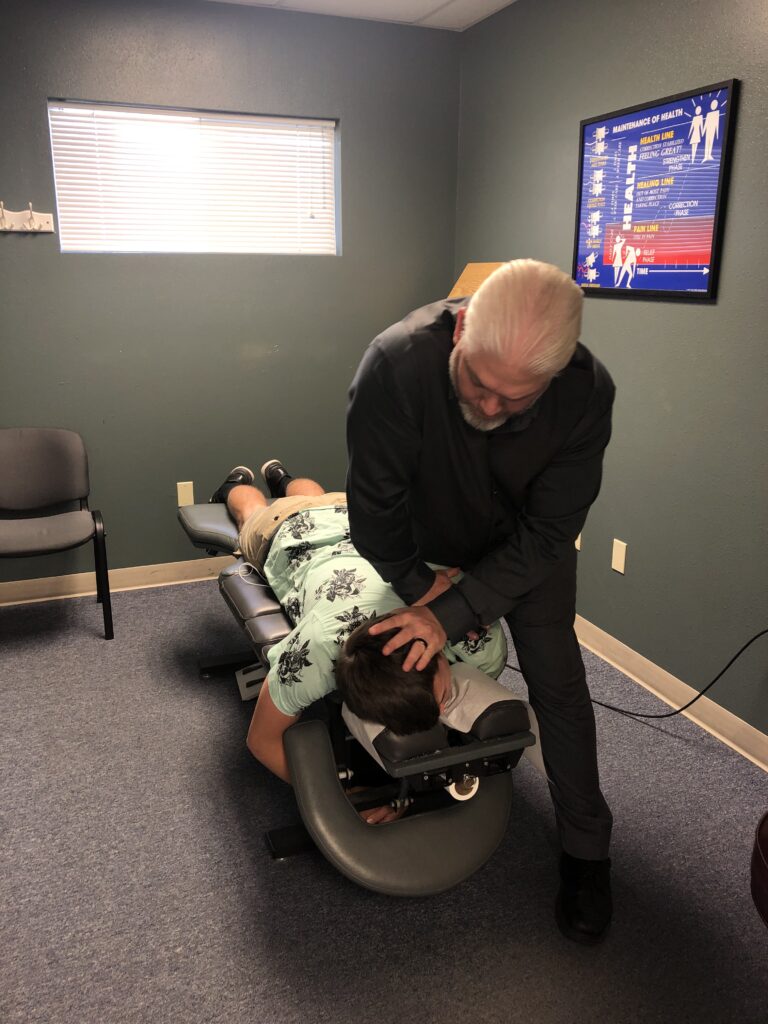
When you come to my office, I'll conduct a thorough assessment of your spine to identify any misalignments or areas of tension that may be contributing to your discomfort. Using precise and gentle techniques, I'll work to realign your spine, which can alleviate pain and enhance your overall function.
During your chiropractic session, you might notice:
- Gentle cracking sounds as I apply targeted pressure to your vertebrae, which is a normal part of the adjustment process.
- A sense of relief that washes over you as the built-up tension in your upper back begins to dissipate.
- Increased mobility, enabling you to move your shoulders and neck with greater ease and comfort.
- A personalized treatment plan that's specifically designed to address your unique pain points and fit your lifestyle needs.
Many of my patients experience immediate relief after their first adjustment, while others may benefit from a series of visits to achieve more lasting results.
Chiropractic adjustments not only provide pain relief but also support better posture and overall spinal health. By helping to realign your spine, I can reduce the strain on surrounding muscles and nerves, which may lead to fewer headaches and an improvement in your overall well-being.
If you're struggling with upper back pain, I encourage you to schedule an appointment with me.
I'll guide you through the entire process, ensuring you understand each step and how it contributes to your recovery. With my expertise and care, you can look forward to a healthier, pain-free life, allowing you to enjoy daily activities without discomfort.
Lifestyle Modifications
As a local chiropractor, I want to share with you how making simple lifestyle changes can significantly alleviate upper back pain. One of the first steps is to create an ergonomic workspace. This means arranging your desk, chair, and computer in a way that supports good posture and minimizes strain on your back.
Additionally, incorporating regular physical activity into your daily routine is crucial. Exercise not only strengthens the muscles that support your spine but also promotes overall wellness.
Let's discuss how these adjustments can positively impact your daily life and enhance your back health. By being proactive about your posture and staying active, you can experience lasting relief from discomfort and improve your quality of life.
Ergonomic Workspace Setup
As a local chiropractor, I often see patients who struggle with upper back pain, especially those who spend long hours at a desk.
It's important to understand that a well-designed ergonomic workspace can significantly alleviate discomfort and promote better health. By setting up your workspace to support your body's natural posture, you not only enhance your comfort but also your productivity.
Here are some essential components to consider for an ergonomic setup:
- Chair: Invest in an adjustable chair that provides lumbar support. This is crucial for maintaining the natural curve of your lower back and preventing strain.
- Desk Height: Ensure that your desk is at the right height. Your elbows should be at a 90-degree angle when typing. This position helps to maintain proper alignment and reduce tension in your upper body.
- Monitor Position: Your monitor should be set at eye level, about an arm's length away from you. This positioning minimizes strain on your neck and encourages a more relaxed posture while you work.
- Keyboard and Mouse: Keep your keyboard and mouse within easy reach to avoid having to stretch or reach awkwardly. This helps prevent unnecessary strain on your shoulders and wrists.
By paying attention to these ergonomic principles, you can create a workspace that not only feels comfortable but also contributes to your overall well-being.
If you're experiencing persistent pain, remember that chiropractic care can help address underlying issues and support your journey to better health.
Regular Physical Activity
As your local chiropractor, I want to emphasize the importance of creating an ergonomic workspace to support your upper back health. However, it's essential to complement that with regular physical activity. Engaging in consistent exercise not only strengthens your back muscles but also enhances your flexibility, significantly reducing the risk of discomfort and pain.
I recommend aiming for at least 150 minutes of moderate aerobic activity each week—activities such as brisk walking or cycling can work wonders. These exercises will help you maintain a healthy back and improve your overall well-being.
In addition to aerobic exercise, incorporating strength training is particularly beneficial for your upper back, shoulders, and core. Exercises like rows, lat pull-downs, and shoulder presses should be part of your routine. These movements not only build strength but also promote proper posture, which is crucial for preventing upper back issues.
Don't overlook the importance of stretching! Regular stretches for your upper back, neck, and shoulders can alleviate tension and improve your mobility. Practices such as yoga or Pilates are fantastic options, as they offer both strength-building and flexibility-enhancing benefits, which can lead to significant pain relief.
Lastly, I encourage you to stay active throughout your day. Remember to take breaks from sitting, stand up, and engage in simple stretches or short walks.
These small adjustments can have a profound impact on how your upper back feels. By making regular physical activity a priority, you're taking an important step toward achieving lasting relief from upper back pain.
As a chiropractor, I'm here to support you on your journey to better health through natural healing methods.
Conclusion
As a local chiropractor, I want to share some effective ways to manage upper back pain that can complement the care you receive in my office. It's important to combine stretching, strengthening exercises, and good posture techniques with an ergonomic workspace to support your back. Adding heat therapy and massage can provide significant relief, helping to relax tight muscles and improve circulation.
Incorporating mindfulness practices and making certain lifestyle changes can also enhance your overall well-being, making it easier to cope with pain. Additionally, don't overlook the benefits of chiropractic adjustments; these can offer targeted care that addresses the root causes of your discomfort.
By embracing these strategies, not only can you alleviate your pain, but you'll also work towards improving your posture and strengthening your back. This holistic approach can lead to a healthier, more comfortable life, and I'm here to guide you every step of the way.