
If you’ve ever been told you have “wear and tear” in your spine, or if you’re noticing that back or neck stiffness just isn’t going away like it used to, you may be wondering what’s happening to your discs — and more importantly, what you can do about it. Degenerative disk disease is one of the most common spinal conditions we see here in Gresham, OR, and the good news is that it doesn’t have to control your life. With the right knowledge and proactive habits, there is a great deal you can do to slow its progression and protect your spinal health for years to come.
What Is Degenerative Disk Disease?
Degenerative disk disease (DDD) is not actually a disease in the traditional sense — it’s a term used to describe the gradual breakdown of the spinal discs that sit between the vertebrae of your spine. These discs act as shock absorbers and allow for flexible movement. Over time, they can lose hydration, become thinner, and develop small tears that cause pain, stiffness, or nerve irritation. While some degree of disc aging is a natural part of getting older, not everyone develops symptoms — and the right lifestyle choices can make a meaningful difference.
Understanding Degenerative Disk Disease
Your spinal discs are remarkable structures. Each one consists of a tough outer ring called the annulus fibrosus and a soft, gel-like center called the nucleus pulposus. Together, they allow your spine to bend, rotate, and absorb the impact of daily movement. From the moment you’re born, these discs are slowly changing — they lose some of their water content over time, which is a completely natural biological process.
The term “degenerative disk disease” becomes relevant when this natural aging process accelerates or begins to cause noticeable symptoms. When a disc becomes significantly dehydrated or develops structural damage, it may no longer cushion the vertebrae above and below it as effectively. This can lead to increased pressure on surrounding joints and nerves, contributing to pain, reduced range of motion, and other issues that affect your day-to-day life.
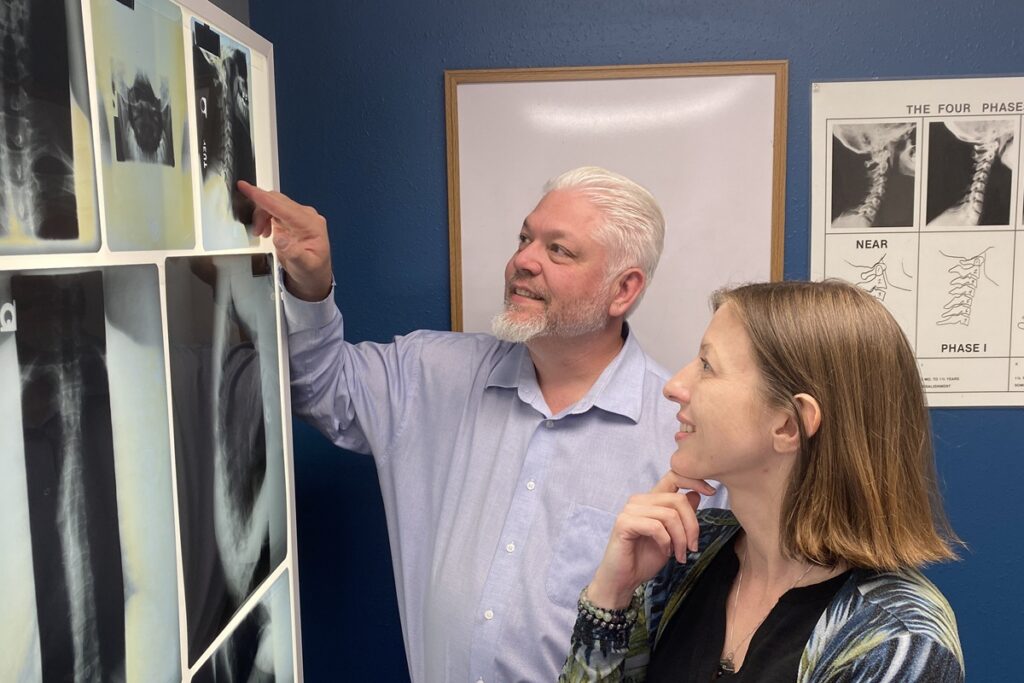
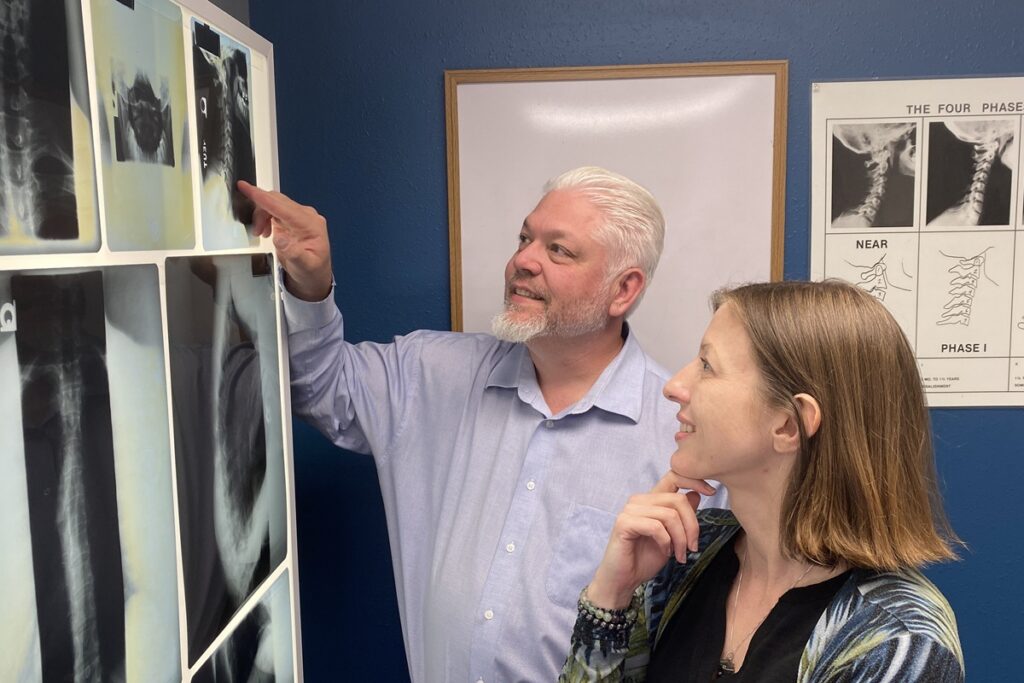
It’s worth knowing that degenerative disk disease is incredibly common. Many people have disc changes visible on imaging that never cause any symptoms at all. That’s actually an encouraging fact — it means that the diagnosis is not automatically a one-way road to disability or surgery. Lifestyle, movement habits, and spinal care all play a significant role in how this condition affects you.
Common Causes and Risk Factors
While aging is the most universal factor in disc degeneration, it’s far from the only one. Several lifestyle and biomechanical factors can either accelerate or reduce the rate at which your discs break down. Understanding these factors is the first step toward prevention.
One of the biggest contributors to early or accelerated disc degeneration is prolonged sitting and a sedentary lifestyle. When you sit for extended periods — especially in poor posture — the pressure on your lumbar discs increases significantly. Many of the patients Dr. Westley Kuns sees at Kuns Chiropractic Clinic in Gresham work desk jobs or spend long hours in vehicles, and this sustained mechanical load on the spine can take a toll over time.
Repetitive physical strain is another major risk factor. Jobs or activities that involve heavy lifting, frequent bending, or twisting without proper body mechanics place ongoing stress on the discs. At the other end of the spectrum, a lack of movement is equally problematic — spinal discs rely on movement and hydration to receive nutrients, since they have no direct blood supply of their own.
Smoking has been shown in research to reduce blood flow to spinal tissues and accelerate disc degeneration. Carrying excess body weight puts additional compressive force on the lumbar spine. Previous spinal injuries — even those that seemed minor at the time — can also disrupt disc integrity and predispose someone to earlier degeneration. Genetics plays a role as well, though it’s not something we can change. What we can change is how we support our spine every single day.
Signs and Symptoms to Watch For
Degenerative disk disease doesn’t always announce itself with dramatic pain right away. In fact, many people live with disc changes for years before symptoms emerge. When they do appear, though, they tend to follow recognizable patterns that are worth understanding.
Low back pain is the most common symptom, particularly in the lumbar (lower) spine. This pain is often described as a deep, aching discomfort that can flare up with certain activities like prolonged sitting, bending, or lifting. Neck pain and stiffness are equally common when the cervical (upper) spine is involved. Some people notice that their pain is worse after periods of inactivity — like getting up stiff in the morning — and actually improves with movement.
When a degenerated disc begins to affect nearby nerves, symptoms can travel into the arms or legs. Radiating pain, numbness, tingling, or weakness in the extremities may suggest that a disc is pressing on a nerve root. This type of referred pain pattern is often called radiculopathy and warrants prompt evaluation. If you’re experiencing any of these symptoms here in Gresham, that’s a sign it’s time to get your spine checked rather than simply waiting it out.
Stiffness and reduced range of motion are also very common. You might notice that turning your head becomes limited, or that bending forward to tie your shoes feels increasingly difficult. These functional limitations can be subtle at first but tend to compound if the underlying spinal changes aren’t addressed.
How Chiropractic Care Fits In
Chiropractic care is one of the most well-established conservative, non-surgical approaches to managing the symptoms and progression of degenerative disk disease. At Kuns Chiropractic Clinic, Dr. Westley Kuns takes a thorough, individualized approach to evaluating your spine and developing a care plan that makes sense for where you are right now.
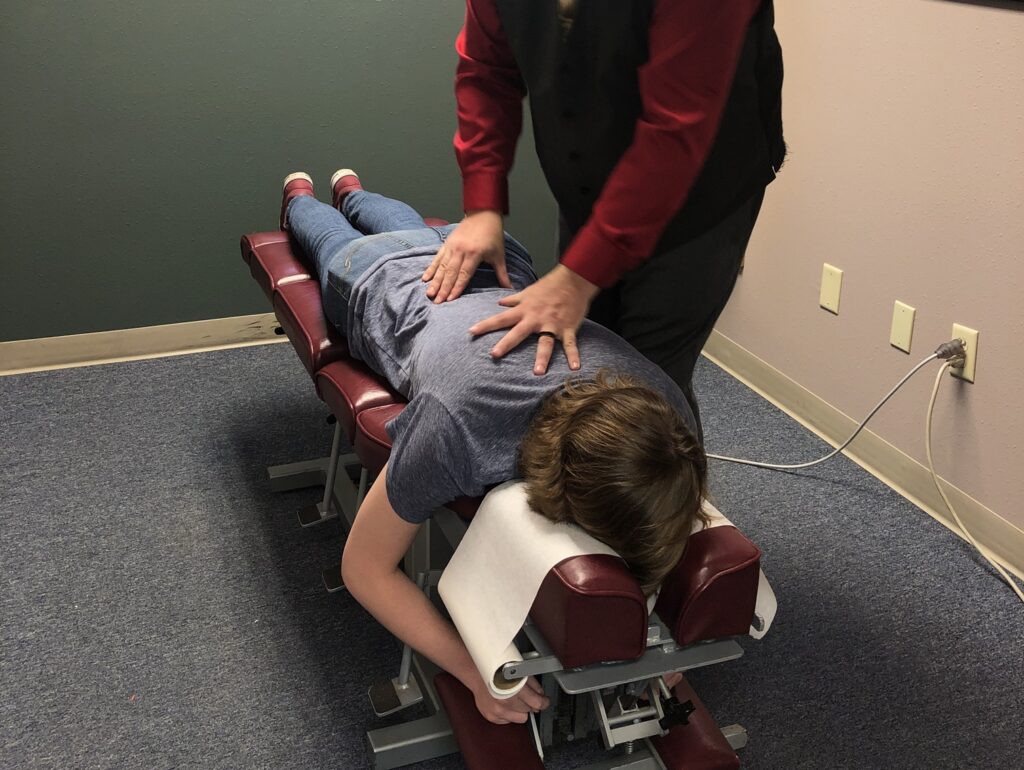
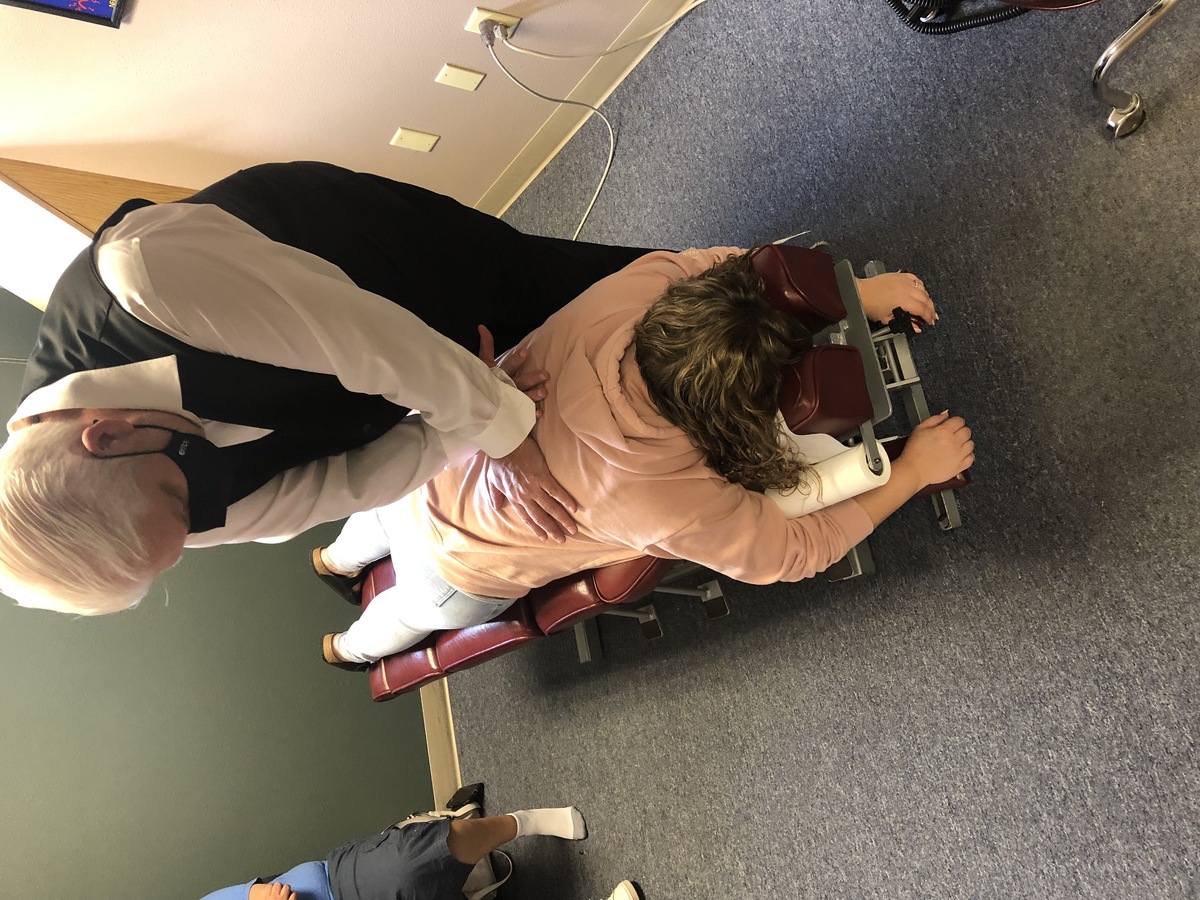
Chiropractic adjustments — also known as spinal manipulations — work to restore proper movement and alignment to the joints of the spine. When spinal segments become restricted or misaligned, surrounding muscles and joints compensate in ways that can accelerate disc stress. By improving mobility and reducing mechanical tension, chiropractic adjustments help take unnecessary load off the affected discs and surrounding structures.
Evidence from organizations such as the American College of Physicians and the National Institutes of Health suggests that spinal manipulation is a reasonable first-line option for managing low back pain — the most common symptom of degenerative disk disease. Research indicates that conservative care approaches, including chiropractic, can be effective at reducing pain and improving function without the need for medication or surgery.
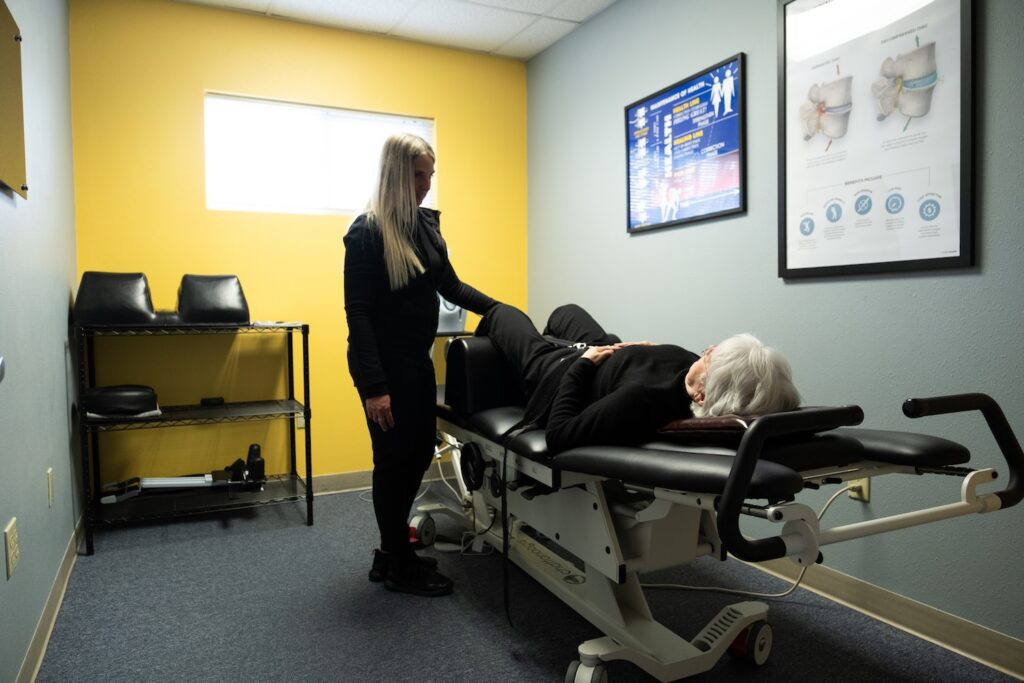
Beyond adjustments, Dr. Westley Kuns may incorporate additional supportive therapies and provide specific guidance on movement, posture, and exercise that are tailored to your spine’s needs. Chiropractic care doesn’t promise to reverse structural disc changes — that’s important to be honest about. But it can meaningfully reduce your symptoms, slow the functional decline associated with degenerative disk disease, and help you live a more active, comfortable life.
Practical Tips for Protecting Your Discs
Prevention is always more effective than treatment, and there are many practical things you can do every day to protect your spinal discs. These habits are not complicated — they simply require consistency and a bit of intention.
Movement is arguably the most important gift you can give your spine. Spinal discs absorb nutrients through a process called imbibition — essentially, they soak up fluid when you move and compress when you’re still. Regular, low-impact movement like walking, swimming, or gentle stretching keeps this process active and your discs more hydrated and nourished. Even short movement breaks every 30-45 minutes during a long workday can make a significant difference over time.
Posture matters enormously, especially in the lumbar and cervical spine. Whether you’re sitting at a desk, driving, or looking down at your phone, try to maintain the natural curves of your spine. Ergonomic adjustments to your workstation — such as raising your monitor to eye level, using a chair with proper lumbar support, or switching to a standing desk — can significantly reduce the daily compressive load on your discs.
Staying well-hydrated is a simple but often overlooked factor. Spinal discs are largely made up of water, and proper systemic hydration supports their ability to maintain height and elasticity. Strengthening the core muscles that support the spine is another powerful protective strategy. A strong core acts as a natural brace for the lumbar spine, reducing the burden placed on the discs during movement and lifting.
Finally, if you smoke, quitting is one of the most impactful things you can do for your spinal health. The vascular effects of smoking on disc tissue are well-documented, and the benefits of cessation extend far beyond just your lungs.
When to See a Chiropractor
Many people in Gresham put off seeking care, hoping that back or neck pain will resolve on its own. Sometimes it does. But when pain persists for more than a few weeks, begins to affect your sleep, work, or daily activities, or starts radiating into your arms or legs, it’s time to get a professional evaluation. Waiting too long can allow compensatory patterns to develop that make the overall picture more complex to address.
Dr. Westley Kuns at Kuns Chiropractic Clinic can help determine whether your symptoms are consistent with degenerative disk disease and what the most appropriate conservative care approach looks like for your specific situation. A thorough spinal assessment — including a review of your health history, posture analysis, and orthopedic testing — helps guide a care plan that’s right for you.
There are also situations where chiropractic care may not be the first or only step, and it’s important to recognize those. If you experience sudden, severe weakness in your legs, loss of bladder or bowel control, or intense pain following a significant trauma, please seek emergency medical attention right away. These are red flags that require immediate evaluation beyond chiropractic scope. Dr. Westley Kuns will always refer you to the appropriate medical provider when needed — your safety and wellbeing come first.
Degenerative Disk Disease: Risk Factors vs. Protective Habits
|
Risk Factor That Accelerates DDD |
Protective Habit to Counter It |
|---|---|
|
Prolonged sitting with poor posture |
Take movement breaks every 30-45 minutes; use ergonomic seating |
|
Sedentary lifestyle |
Incorporate daily low-impact movement like walking or swimming |
|
Smoking |
Quit smoking to improve spinal tissue circulation |
|
Excess body weight |
Maintain a healthy weight to reduce compressive spinal load |
|
Weak core muscles |
Perform targeted core strengthening exercises regularly |
|
Poor lifting mechanics |
Lift with your legs and keep the load close to your body |
|
Chronic dehydration |
Drink adequate water daily to support disc hydration |
Myths vs. Facts About Degenerative Disk Disease
Myth: Degenerative disk disease means your spine is “crumbling” and nothing can help.
Fact: DDD describes gradual disc changes, not a catastrophic structural collapse. Many people with significant disc changes on imaging have no symptoms at all. Conservative care, movement, and lifestyle changes can meaningfully improve quality of life and slow functional decline.
Myth: If you have degenerative disk disease, you should rest and avoid movement.
Fact: Rest is rarely the right answer for spinal conditions. Spinal discs actually depend on movement for their nutrition. Prolonged inactivity tends to worsen stiffness, weaken supportive muscles, and increase pain over time. Guided, appropriate movement is typically far more beneficial.
Myth: Degenerative disk disease only happens to elderly people.
Fact: While disc degeneration does become more common with age, it can occur in adults in their 30s and 40s — and sometimes even younger — particularly in those with physically demanding jobs, poor postural habits, or a history of spinal injury. Here in Gresham, Dr. Westley Kuns regularly evaluates patients of a wide range of ages presenting with early disc-related symptoms.
Myth: Surgery is inevitable once you’re diagnosed with DDD.
Fact: The vast majority of people with degenerative disk disease do not require surgery. Conservative approaches — including chiropractic care, exercise, physical therapy, and lifestyle modification — are considered the appropriate first-line management for most cases. Surgery is typically reserved for severe cases involving significant neurological compromise that don’t respond to conservative care.
Myth: Chiropractic adjustments are dangerous for degenerated discs.
Fact: When performed by a trained, licensed chiropractor, spinal adjustments are considered a safe and evidence-informed option for managing degenerative disk disease symptoms. Dr. Westley Kuns always performs a thorough evaluation before any treatment to ensure the approach is appropriate and safe for your specific spinal condition.
Final Thoughts from Kuns Chiropractic Clinic in Gresham, OR
Degenerative disk disease can feel like a frightening diagnosis, but it doesn’t have to define your future. The spinal discs are remarkably resilient structures, and with the right support, most people with DDD go on to live active, fulfilling lives. The key is being proactive rather than reactive — taking care of your spine before symptoms become severe, and knowing where to turn when they do arise.
Here at Kuns Chiropractic Clinic, we genuinely care about the long-term health and wellbeing of the Gresham community. Dr. Westley Kuns brings experience, compassion, and a thorough understanding of spinal biomechanics to every patient he sees. Whether you’re just beginning to notice some stiffness and want to be proactive, or you’re dealing with ongoing pain that’s affecting your quality of life, our doors are open to help.
You don’t have to simply accept back pain or progressive stiffness as inevitable. Small, consistent choices — how you sit, move, hydrate, and care for your spine — add up to a significant difference over a lifetime. And when you need guidance, support, and hands-on care, Kuns Chiropractic Clinic in Gresham, OR is here for you every step of the way.
Frequently Asked Questions About Degenerative Disk Disease
Can degenerative disk disease be reversed?
Structural disc degeneration cannot be fully reversed — the changes to the disc tissue are generally permanent. However, symptoms can often be significantly reduced, and progression can be slowed through consistent lifestyle habits, exercise, and conservative care like chiropractic treatment.
Is walking good for degenerative disk disease?
Yes, walking is generally one of the most recommended activities for people with degenerative disk disease. It promotes spinal disc hydration, strengthens supportive muscles, and improves circulation — all without placing excessive stress on the spine. Start with shorter distances and gradually increase as tolerated.
How do I know if my back pain is from degenerative disk disease?
A proper diagnosis requires a clinical evaluation and, in some cases, imaging such as an MRI or X-ray. Common indicators include persistent low back or neck pain that worsens with sitting and improves with movement, or pain that radiates into the arms or legs. A chiropractor can help assess your symptoms and guide you toward the right next steps.
How often should I see a chiropractor for degenerative disk disease?
The frequency of chiropractic visits varies depending on the severity of your symptoms and your overall spinal health. Dr. Westley Kuns will assess your condition and recommend a care schedule that aligns with your specific needs and goals. Many patients begin with more frequent visits and transition to maintenance care as their symptoms stabilize.
Are there exercises I should avoid with degenerative disk disease?
High-impact activities, heavy axial loading (like heavy squatting), and exercises that involve repeated extreme spinal flexion under load can increase disc stress. It’s best to consult with a chiropractor or healthcare provider before beginning a new exercise program so your routine can be tailored to your spinal condition.
Does diet play a role in degenerative disk disease?
While diet doesn’t directly treat disc degeneration, an anti-inflammatory diet rich in whole foods, vegetables, lean proteins, and omega-3 fatty acids can support overall tissue health and reduce systemic inflammation. Maintaining a healthy weight through nutrition also directly reduces the compressive load on spinal discs.
TL;DR — Key Takeaways
-
Degenerative disk disease is the gradual breakdown of spinal discs and is common with aging, but symptoms are not inevitable — lifestyle choices matter enormously.
-
Major risk factors include prolonged sitting, poor posture, smoking, excess weight, and repetitive spinal strain — all of which can be addressed with intentional habits.
-
Regular movement, proper ergonomics, core strengthening, and staying hydrated are among the most effective ways to protect your discs over time.
-
Chiropractic care, like what Dr. Westley Kuns provides at Kuns Chiropractic Clinic in Gresham, OR, offers a non-invasive, evidence-informed approach to managing symptoms and supporting long-term spinal health.
-
Surgery is rarely necessary — most people with DDD respond well to conservative care, especially when they seek help early and stay consistent with protective habits.