
If you’ve been dealing with persistent back pain, a nagging herniated disc, or radiating leg pain that just won’t quit, you’ve probably wondered whether there’s a non-surgical option that could actually help. Here in Gresham, OR, many patients come through the doors of Kuns Chiropractic Clinic feeling frustrated after trying medications, rest, and other therapies with limited results. One of the most effective tools we use for these kinds of stubborn spinal problems is spinal decompression therapy. Understanding how does spinal decompression work — and whether it might be right for you — is the first step toward making an informed decision about your health.
What Is Spinal Decompression?
Spinal decompression is a non-invasive, traction-based therapy designed to gently stretch the spine and relieve pressure on compressed spinal discs and nerves. It creates negative pressure within the disc space, which can help retract bulging or herniated disc material and encourage the flow of nutrients back into damaged discs. Think of it as giving your spine the room it needs to heal.
- What Is Spinal Decompression Therapy?
- How Does Spinal Decompression Work?
- What Conditions Can Spinal Decompression Help?
- How Chiropractic Care and Spinal Decompression Work Together
- Practical Tips to Support Your Spinal Health
- When to See a Chiropractor About Spinal Decompression
What Is Spinal Decompression Therapy?
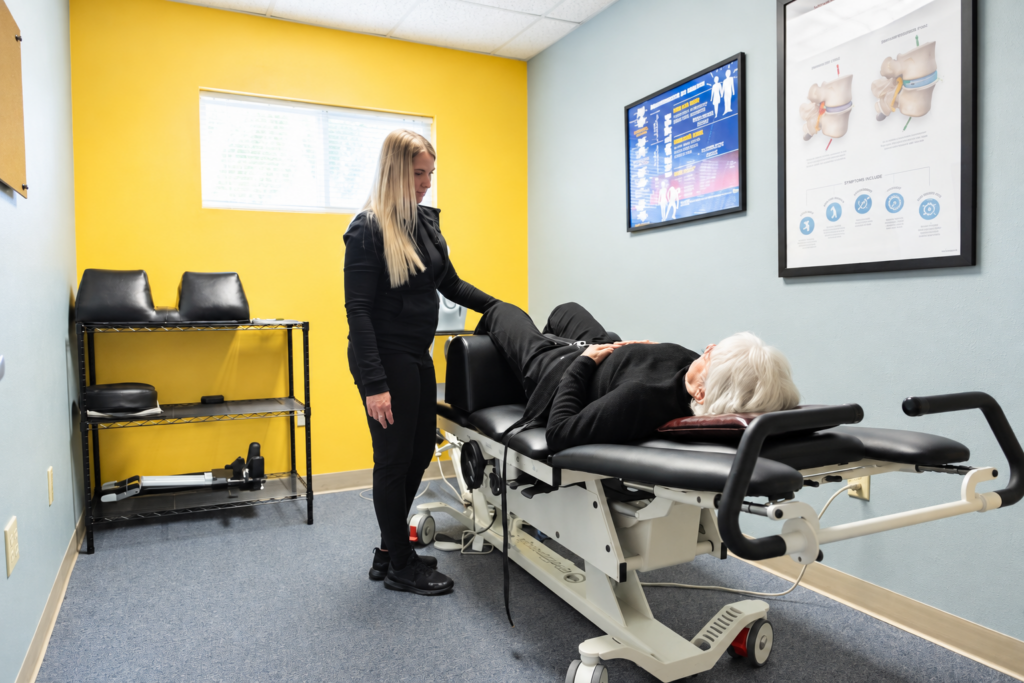
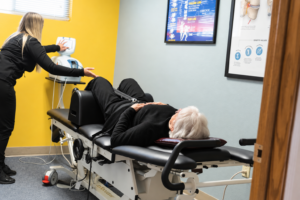
Spinal decompression therapy is a modern, motorized form of traction therapy performed on a specialized table. The patient is secured with harnesses — either around the pelvis for lumbar (lower back) decompression, or around the neck for cervical (upper spine) decompression. The table then applies a carefully controlled, intermittent pulling force to gently elongate the spine.
This is not the same as manual traction your doctor might have used decades ago. Today’s computerized spinal decompression equipment allows Dr. Westley Kuns to customize the angle, force, and timing of each session to match each patient’s unique anatomy and condition. The treatment is typically gentle — most patients report feeling mild stretching and even find it relaxing.
At Kuns Chiropractic Clinic, spinal decompression therapy is offered as part of a comprehensive, personalized care plan. It’s a conservative, drug-free option that fits well within the chiropractic philosophy of supporting the body’s own healing capacity.
How Does Spinal Decompression Work?
To understand how does spinal decompression work at a mechanical level, it helps to think about what happens inside a compressed spinal disc. Your intervertebral discs act as cushions between the vertebrae of your spine. They’re filled with a gel-like material (the nucleus pulposus) and surrounded by a tough outer ring (the annulus fibrosus). When a disc is compressed — whether from poor posture, aging, injury, or repetitive stress — it loses height and hydration. That compression can cause disc material to bulge or herniate outward, pressing on nearby nerves and causing pain, numbness, or tingling.
Spinal decompression therapy works by creating a negative intradiscal pressure. When the spine is gently stretched in a controlled, cyclic manner, the pressure inside the disc drops below normal atmospheric levels. This negative pressure creates a kind of suction effect that can draw bulging or herniated disc material back toward the center of the disc, away from the nerves it was irritating. It also allows oxygen, water, and nutrients to flow back into the disc — something that’s critical for disc healing, since adult spinal discs don’t have a direct blood supply and rely on this diffusion process to stay healthy.
The intermittent nature of the therapy is important. By alternating between tension and relaxation phases, the treatment avoids triggering protective muscle spasms that can occur with sustained traction. This is one reason why modern spinal decompression is often better tolerated than older traction methods. Research suggests that this type of therapy can be beneficial for patients with disc-related conditions, particularly when combined with other conservative care strategies.
If you’ve been reading about why spinal decompression works when everything else has failed, this mechanism is a big part of the answer. Many people try pain medications or passive rest, which don’t actually address the structural cause of disc compression. Spinal decompression works at the root level — mechanically reducing the pressure that’s causing the problem.
What Conditions Can Spinal Decompression Help?
Spinal decompression isn’t a one-size-fits-all solution, but it is appropriate for a meaningful range of spinal conditions. Here in Gresham, Dr. Westley Kuns evaluates each patient thoroughly before recommending this therapy to make sure it’s the right fit.
One of the most common reasons patients seek out spinal decompression is a herniated disc. When disc material pushes through the outer ring and presses on a nerve root, the resulting pain can be severe and debilitating. Spinal decompression has been shown to help reduce that pressure and support the retraction of herniated material over a series of sessions. If you’re curious about what leads to this problem in the first place, our article on what causes a herniated disc goes into helpful detail.
Sciatica is another condition that responds well to spinal decompression. Sciatica occurs when the sciatic nerve — which runs from the lower back down through the hips and legs — becomes compressed or irritated, often by a herniated disc or bone spur. Patients dealing with radiating leg pain, numbness, or weakness may find significant relief through decompression therapy. You can also learn more about sciatica treatment options available at Kuns Chiropractic Clinic.
Degenerative disc disease is a condition where the discs lose hydration and height over time, leading to chronic pain and stiffness. Spinal decompression helps by drawing fluid and nutrients back into dehydrated discs. Our blog post on how to prevent degenerative disc disease offers additional perspective on how lifestyle choices intersect with this condition.
Other conditions commonly addressed with spinal decompression include spinal stenosis (narrowing of the spinal canal), facet joint syndrome, and chronic low back pain. Patients dealing with back pain or neck pain that has persisted despite other interventions are often good candidates for an evaluation.
It’s worth noting that spinal decompression is not appropriate for everyone. Patients with certain conditions — such as fractures, severe osteoporosis, spinal tumors, or those who are pregnant — may not be candidates for this therapy. Dr. Westley Kuns conducts a full assessment before recommending any treatment, ensuring your safety is always the top priority.
How Chiropractic Care and Spinal Decompression Work Together
Understanding how does spinal decompression work is most meaningful when you see it in the context of a broader care plan. At Kuns Chiropractic Clinic, spinal decompression rarely stands alone. Dr. Westley Kuns integrates it with other evidence-informed conservative care approaches to support whole-body healing.
Chiropractic adjustments are often used alongside spinal decompression. While decompression creates space within the disc and reduces nerve compression, chiropractic adjustments help restore proper joint alignment and mobility throughout the spine. Together, these two therapies address the structural causes of pain more comprehensively than either would alone. You can learn more about the chiropractic care services offered at our Gresham clinic.
Rehabilitative exercise and physical therapy also play an important role in the recovery process. Once the acute compression and pain are reduced through spinal decompression, strengthening the muscles that support the spine helps prevent re-injury. Core stability, postural awareness, and movement retraining are all part of a well-rounded care plan. Similarly, patients recovering from an auto accident may find that decompression pairs well with auto injury chiropractic care, particularly when whiplash or disc injuries are involved.
For patients interested in long-term spinal health — not just pain relief — wellness chiropractic care at Kuns Chiropractic Clinic provides ongoing support to keep the spine functioning optimally after active treatment is complete.
Practical Tips to Support Your Spinal Health
Whether you’re currently undergoing spinal decompression therapy or simply trying to protect your spine, there are several everyday habits that can make a meaningful difference. These aren’t complicated — small, consistent changes in how you move and sit can reduce spinal compression over time.
Posture is one of the most overlooked contributors to spinal disc problems. Prolonged sitting, especially with a forward head posture, increases intradiscal pressure significantly. If you work at a desk, make a habit of standing and walking for a few minutes every 30 to 45 minutes. Adjust your workstation so your screen is at eye level and your lower back is supported.
Staying hydrated is more important for your discs than most people realize. Since spinal discs absorb fluid and nutrients through diffusion, adequate hydration throughout the day directly supports disc health. Aim to drink water consistently, not just when you feel thirsty.
Sleep position matters, too. Sleeping on your side with a pillow between your knees, or on your back with a pillow under your knees, reduces stress on the lumbar spine. Avoid sleeping on your stomach, which places excessive rotational stress on the neck and lower back.
Finally, gentle movement is almost always better than complete rest for spinal conditions. Walking, gentle stretching, and low-impact exercise keep spinal fluid circulating and muscles engaged. Always check with Dr. Westley Kuns or your care team before starting a new exercise routine if you’re in the middle of treatment.
When to See a Chiropractor About Spinal Decompression
If you’ve been experiencing persistent low back pain, neck pain, or radiating symptoms for more than a few weeks, it’s worth having an evaluation. Early intervention typically leads to better outcomes, and a conservative approach like spinal decompression can often help patients avoid more invasive options like surgery or long-term medication use.
Signs that you may benefit from a spinal decompression evaluation include: disc-related back or neck pain that hasn’t resolved with rest; pain, numbness, or tingling that radiates into the arms or legs; a diagnosis of a herniated or bulging disc; or chronic low back pain that has been unresponsive to other treatments. Our in-depth look at how chiropractic care addresses chronic back pain may also help you better understand your options.
There are also some red flag symptoms that warrant prompt medical attention rather than chiropractic care alone. These include loss of bowel or bladder control, severe progressive weakness in the legs, or pain following a significant trauma. These symptoms need to be ruled out by a physician before beginning any conservative care.
At Kuns Chiropractic Clinic in Gresham, OR, Dr. Westley Kuns takes time during each consultation to understand your full health history, review any imaging you may have, and create a care plan that’s appropriate for your specific situation. You won’t be put on a cookie-cutter protocol. Every plan is tailored to your needs.
| Condition | How Spinal Decompression May Help | Additional Therapies Often Combined |
|---|---|---|
| Herniated Disc | Reduces intradiscal pressure; may retract herniated material away from nerve | Chiropractic adjustments, rehabilitation exercises |
| Sciatica | Relieves nerve compression at the lumbar spine | Soft tissue therapy, stretching, physical therapy |
| Degenerative Disc Disease | Rehydrates disc tissue; improves nutrient exchange | Wellness care, posture correction, core strengthening |
| Spinal Stenosis | Creates more space within the spinal canal, reducing nerve irritation | Chiropractic adjustments, therapeutic movement |
| Facet Joint Syndrome | Reduces compressive load on facet joints | Adjustments, heat therapy, ergonomic guidance |
| Chronic Low Back Pain | Addresses structural contributors to ongoing pain | Physical therapy, lifestyle modifications |
Myths vs. Facts About Spinal Decompression
Myth: Spinal decompression is painful.
Fact: Most patients find spinal decompression to be comfortable and even relaxing. The motorized table applies a slow, controlled stretch that avoids triggering protective muscle guarding. Some patients notice mild soreness after the first few sessions as the body adjusts, but significant pain during treatment is not typical.
Myth: Spinal decompression is the same as old-fashioned traction.
Fact: While both involve stretching the spine, modern spinal decompression is far more sophisticated. Today’s computerized systems allow for precise control over angle, force, and cycle timing — all customized to the individual patient. This level of control makes the treatment more effective and reduces the risk of muscle spasm that older traction methods sometimes triggered.
Myth: You’ll need spinal decompression forever.
Fact: Spinal decompression is typically delivered in a structured series of sessions, not indefinitely. Many patients achieve lasting relief from a defined course of treatment, especially when it’s paired with rehabilitative exercises and lifestyle modifications that support long-term spinal health.
Myth: Surgery is the only real solution for a herniated disc.
Fact: Surgery may be necessary in some cases, but a significant number of patients with herniated discs respond well to conservative care, including spinal decompression. Clinical guidelines from organizations like the American College of Physicians generally recommend exhausting conservative options before considering surgery for most non-emergency spinal conditions.
Myth: Spinal decompression works for everyone with back pain.
Fact: Spinal decompression is highly effective for specific disc-related and nerve-related conditions, but it isn’t appropriate for all causes of back pain. A thorough evaluation is always the starting point to determine whether this therapy is the right match for your individual diagnosis.
Final Thoughts from Kuns Chiropractic Clinic in Gresham, OR
Living with chronic back pain, disc problems, or radiating nerve pain can feel exhausting and discouraging. But there are real, effective conservative options available — and understanding how does spinal decompression work is a meaningful first step toward finding relief without surgery or long-term medication use.
At Kuns Chiropractic Clinic, Dr. Westley Kuns and the team are here to answer your questions, evaluate your condition honestly, and guide you toward the care that actually makes sense for your body. We’re proud to serve the Gresham, OR community and the surrounding area, and we take our responsibility to your health seriously. Whether you’re dealing with a disc injury, sciatica, or years of chronic pain, we’d love to be a part of your recovery journey.
If you’re curious about whether spinal decompression might be right for you, don’t wait. Reach out to Kuns Chiropractic Clinic in Gresham and take that first step toward feeling better — naturally.
Frequently Asked Questions
How many spinal decompression sessions will I need?
The number of sessions varies depending on the condition being treated and the individual patient’s response. Many patients undergo a series of sessions over several weeks, with progress evaluated regularly. Dr. Westley Kuns will outline a recommended plan based on your specific diagnosis and goals.
Is spinal decompression safe?
For appropriate candidates, spinal decompression is considered a safe, non-invasive therapy. A thorough health history and evaluation are conducted beforehand to screen out any contraindications. Patients with certain conditions — such as fractures, advanced osteoporosis, or pregnancy — may not be suitable candidates.
How does spinal decompression work differently from chiropractic adjustments?
Chiropractic adjustments focus on restoring proper joint alignment and mobility throughout the spine and extremities. Spinal decompression specifically targets intradiscal pressure and disc hydration through a gentle mechanical stretching process. The two therapies complement each other well and are often used together.
Will spinal decompression help my sciatica?
Sciatica caused by lumbar disc herniation or disc-related nerve compression is one of the conditions that responds well to spinal decompression therapy. By reducing pressure on the affected nerve root, decompression can help relieve radiating pain, numbness, and tingling. An evaluation will determine whether this is the best approach for your specific situation.
How soon will I notice results from spinal decompression?
Some patients notice improvement within the first few sessions, while others experience gradual relief over a longer course of treatment. Results depend on the severity and nature of the condition being treated, as well as other lifestyle and health factors. Consistency with the recommended treatment plan tends to produce the best outcomes.
Can I combine spinal decompression with other treatments?
Yes — in fact, combining spinal decompression with chiropractic adjustments, physical therapy, and rehabilitative exercises typically produces better results than decompression alone. At Kuns Chiropractic Clinic, care plans are designed to integrate multiple supportive approaches based on each patient’s needs.
TL;DR — Key Takeaways
- Spinal decompression therapy uses controlled, motorized traction to create negative pressure within spinal discs, helping relieve compression on nerves and supporting disc healing.
- It is particularly effective for conditions like herniated discs, sciatica, degenerative disc disease, and spinal stenosis when other conservative approaches haven’t provided sufficient relief.
- Modern computerized spinal decompression is more precise and better tolerated than older traction methods, and most patients find it comfortable.
- At Kuns Chiropractic Clinic in Gresham, OR, Dr. Westley Kuns integrates spinal decompression with chiropractic adjustments, physical therapy, and personalized care planning for comprehensive results.
- A thorough evaluation is always the starting point — spinal decompression is highly effective for the right candidates, but not appropriate for every condition or every patient.